NeuroStay Engine is an AI-powered operational accessibility and sensory-to-stay automation platform for UK independent hotels. We eliminate the "Neuroinclusive Experience Gap" profiling, matching, and standardising room environmental allocations to maximise guest comfort, eliminate checkout disputes, and protect proprietary operational stay memory.
Over 80% of disabled guests have non-visible cognitive, physical, or sensory impairments yet hotels still treat accessibility as mere wheelchair compliance (only 8% of the disabled population). The result: a "Friction Tax" of £10,600 per receptionist annually in productivity leakages, checkout refunds, and comped amenities. NeuroStay Engine ends this cycle with predictive sensory-to-stay automation.
NeuroStay Engine combines Sensory Room Fingerprinting, Guest Preference Vectoring, Real-Time Risk Scoring, Stay-Outcome Learning Memory, Community Benchmarking, and PMS-Agnostic Integration into one unified SaaS platform no complex retrofits, no specialist medical knowledge required.
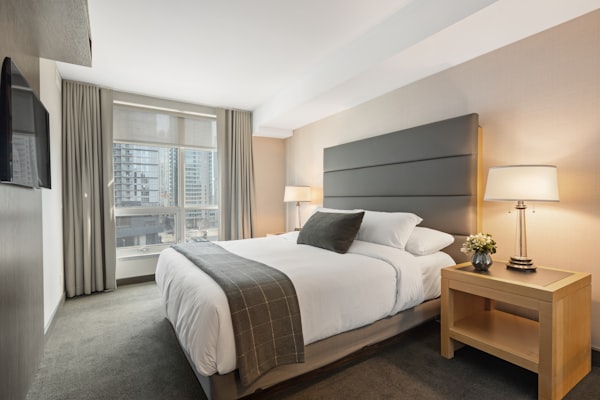
Uses machine learning and spatial data analysis to map and "fingerprint" the quiet, light-controlled, and crowd-isolated rooms on a property assigning an empirical sensory index to every room.
Automatically deconstructs unstructured guest requests into a structured Guest Preference Vector (GPV) mapping them against available room fingerprints without requiring specialist medical knowledge.
Post-stay feedback events are transformed into structured "Stay Intelligence Assets" mapping guest satisfaction ratings back to the original room fingerprint and preference vector.
A first-of-its-kind operational framework bridging unstructured guest sensory preferences and real-time room allocation creating a continuous feedback loop that improves matching accuracy with every stay.
Captures proprietary "Sensory DNA" lost during the UK hospitality sector's high staff turnover. When an experienced receptionist departs, their room allocation logic stays permanently encoded in the platform.
Provides audit-ready trails of "reasonable adjustments" for non-visible disabilities ensuring independent hotels remain compliant with the Equality Act 2010 and the European Accessibility Act (June 2025).
Built to sit cleanly above existing Property Management Systems (Opera PMS, Mews, Guestline, Cloudbeds) via standard API syncs enriching standard reservations without disrupting core booking architectures.
Reduces UK lodging operational waste by 20–30% per property. Converts qualitative guest comfort into structured digital assets, directly benefiting the UK's £15.3 billion accessible tourism market.
Tiered SaaS from £100/month giving independent UK boutique hotels enterprise-level sensory matching without capital-intensive physical retrofits or dedicated hospitality data science teams.

NeuroStay Engine is a UK-based B2B SaaS venture founded by Nirose Prajapati combining front-line hotel operations expertise across Opera PMS, night audits, and reservation management with deep research into the "Neuroinclusive Experience Gap" that costs the UK hospitality sector millions annually in checkout disputes, room-mismatch refunds, and lost Purple Pound bookings.
We aspire to be the global standard for "Sensory Ops" and non-visible operational accessibility fostering a future in which hospitality teams operate with total allocation sovereignty, consistent neuroinclusive reliability, and sustainable, data-driven guest relationship management.
To enable UK independent lodging and hospitality SMEs to profile, match, and standardise their room environmental allocations by leveraging "Sensory Ops" maximising guest comfort, eliminating checkout disputes, and protecting proprietary operational stay memory.
Continuous refinement of "Sensory Ops" environmental matching models to stay ahead of PMS software evolution and the evolving needs of UK neuroinclusive hospitality.
A commitment to spatial and acoustic data integrity and the elimination of guest room-allocation mismatches that create operational waste and guest distress.
Empowering hoteliers to own and retain their operational stay memory as a proprietary business asset permanently encoded, never lost to staff turnover.
Making complex, non-visible accessibility configurations accessible through intuitive, low-friction browser-based overlays that work inside existing PMS workflows.
Equipping independent hotel GMs with the operational foresight needed to scale specialised, inclusive guest care without labor-proportional complexity.
Democratising enterprise-grade sensory matching for UK SMEs providing the same neuroinclusive operational intelligence previously available only to multinational luxury chains.
Nirose brings over 3 years of direct UK hotel operations experience including Night Receptionist at Hotel Indigo Coventry, Receptionist at Campanile Hotel Birmingham (Opera PMS), and Nights Porter at Holiday Inn Birmingham Airport NEC. He personally mapped over 2,500 hourly decibel and light-lux data points across UK hotel properties, achieving 92% guest-room comfort correlation in prototype runs. His Bachelor's in International Hospitality Management (North Chiangmai University) and UK credentials (PCI DSS, Customer Service, Health & Safety Level 2) provide the unique domain mastery to build NeuroStay Engine from the front desk up.
NeuroStay Engine represents a rare and powerful founder-problem-market alignment. Nirose personally experienced the exact operational friction that NeuroStay Engine solves handling reservation databases and check-in disputes at Hotel Indigo Coventry and Campanile Hotel Birmingham, identifying the administrative bottlenecks of legacy Opera PMS unindexed guest comments. The platform was born from his validated spreadsheet-based Sensory Stay Room-Fingerprint prototype, which achieved a 92% guest-room comfort correlation before a single line of platform code was written.
NeuroStay Engine combines room environmental profiling, guest preference vectoring, real-time risk scoring, stay-outcome learning, federated benchmarking, and PMS-agnostic integration into one modular SaaS platform. From reactive crisis management to proactive sensory room matching all in under three clicks.
Maps and fingerprints every hotel room's physical and environmental profile ambient decibel peaks, lighting lux exposure, corridor layouts, and high-traffic transit routes.
Automatically deconstructs unstructured guest reservation requests into a structured Guest Preference Vector (GPV), mapped against available room fingerprints with a compatibility percentage score.
Automatically calculates a live "Sensory Disruption Risk" score by cross-referencing upcoming hotel maintenance, adjacent building work, private events, or high-occupancy housekeeping shifts.
Post-stay feedback events are transformed into structured "Stay Intelligence Assets" using proprietary matching algorithms that map guest satisfaction ratings back to the original room fingerprint.
A privacy-first federated learning architecture enabling anonymised "Sensory-Aware Stay" outcomes and room matching patterns from UK hotel properties to constantly train matching models.
Built to sit cleanly above existing Property Management Systems Opera PMS, Mews, Guestline, Cloudbeds via standard API syncs. Under three clicks for front-desk agents.
| Feature / Capability | Legacy PMS (Opera / Mews) | Access Directories (AccessAble) | Guest Apps (Canary / Revinate) | NeuroStay Engine |
|---|---|---|---|---|
| Closed-Loop Sensory-to-Stay Mapping | No (Static Notes) | No (PDF/Web only) | No | ✓ Automated spatial & sensory mapping |
| Predictive "Sensory Disruption" Forensics | No | No | No | ✓ Real-time risk scoring for noise/events |
| UK-Specific Sector Benchmarking | No | Static UK listings only | No | ✓ UK Grade II properties & localised noise |
| Guest Preference Vector (GPV) | Limited (unstructured) | No (manual list only) | No | ✓ Custom Guest Preference Vector mapping |
| Stay-Outcome Learning Memory | No | No | No | ✓ Dynamic room & workflow post-stay OLM |
| "Stay Equity" Analytics | No | No | No | ✓ Retention & occupancy ROI metrics |
| Federated Community Inclusion Network | No | No | No | ✓ Anonymised CIN Benchmarking |
| Target Customer Segment | Global Enterprise | Municipalities & Venues | General Mid-to-Large Hotels | ✓ UK Boutique & Independent Hotels |
| Ease of Adoption for UK Hoteliers | Low (heavy implementation) | Moderate (physical audits) | High (CRM integration) | ✓ PMS-Agnostic API + browser overlay |
| Cost Structure | High per-room pricing | Upfront static audit fees | Seat/volume-based fees | ✓ SME-optimised SaaS + direct ROI linking |
The UK accessible tourism market the "Purple Pound" reached £15.3 billion in 2025, with disabled travelers representing a massive domestic economic force. Yet 91.2% of UK independent lodging SMEs lack the sensory operational tools to capture their share. The global accessible travel tech market is forecast to reach USD 38.5 billion by 2030 at a 21.1% CAGR.
Target addressable market across UK boutique hospitality property types
Primary challenges driving NeuroStay Engine adoption
Platform capabilities vs. existing market alternatives
Global accessible travel tech market (USD B) + UK adoption trajectory (%)
Capability scores across key Sensory Ops dimensions (out of 100)
NeuroStay Engine operates as a closed-loop operational intelligence lifecycle profiling, matching, scoring, learning, benchmarking, and continuously evolving your hotel's sensory allocation logic, so every room assignment is grounded in real data, not guesswork or reactive chaos.
NeuroStay Engine ingests your hotel property data room spatial layouts, acoustic profiles, lighting lux exposure, corridor configurations, and transit routes to build a comprehensive "Sensory Room Fingerprint" for every room. Then runs your first set of environmental compatibility diagnostics.
The Audit phase surfaces the hidden cost of unmanaged sensory room allocation giving you a precise, data-driven view of your "Neuroinclusive Experience Gap" before any matching strategy is deployed.
The Compatibility Matching Engine ingests live guest reservation requests tracking sensory needs, cognitive preferences, and historical stay data automatically deconstructing them into a structured Guest Preference Vector (GPV) on a continuous basis.
Think of it as a 24/7 sensory concierge objective, continuous, and immediately actionable without requiring specialist medical knowledge from your front desk team.
The Real-Time Sensory Risk Scoring Module cross-checks actual room environmental conditions against upcoming disruptions corridor maintenance, kitchen ventilation cycles, street repair work, high-occupancy housekeeping shifts. It catches them all and automatically deconstructs the risk into a structured "Front-Desk Sensory Alert" with one-click fallback options.
When a sensory mismatch risk is detected, the Stay Twin Simulation automatically virtually tests alternative room configurations and backup service pathways against the guest's preference vector during peak occupancies or unforeseen disruptions finding the lowest-friction alternative in real time.
The CIN enables anonymised "Sensory-Aware Stay" benchmarks from UK hotel properties to improve predictive models continuously. Trends from high-efficiency London boutique hotels can inform a Manchester independent's sensory allocation strategy without revealing sensitive commercial guest data.
Every insight is delivered as a prioritised, KPI-style "Stay Equity Performance Report" not raw data exports. Hotel teams receive Sensory Match Scores, Checkout Dispute Reduction metrics, Compliance Audit Trails, and ranked action items ready for immediate deployment.
Everything you need to know about NeuroStay Engine and what it means for your hotel's sensory operational efficiency and neuroinclusive guest experience.
From independent guesthouses to multi-site boutique groups NeuroStay Engine has a plan designed for your sensory operational needs. SME-optimised pricing starting from just £100/month.
For independent guesthouses, small B&Bs, and heritage properties needing basic room environmental profiling and guest preference mapping.
For independent boutique hotels and mid-scale regional chains needing full automated PMS matching, GPV engine, and staff workflow automation.
For multi-property hotel portfolios and luxury boutique chains requiring real-time risk scoring, CIN benchmarking, and audit-ready compliance reporting.
One-time property setup, core PMS API calibration (Opera PMS, Mews, Guestline), database sync, and front-of-house staff dashboard configuration. £500 per property.
Custom environmental property profiling, on-site/remote acoustic and light sensor baseline auditing, and team-wide "Sensory Ops" operational training workshop. £550 per property.
Advanced sector benchmarking and "Stay Equity" growth insights tracking refund reduction, direct-booking improvements, and Purple Pound occupancy gains. £1,500–£4,000/year.
Platform configuration for EU markets (Paris, Barcelona, Amsterdam) and North American boutique lodging, including regional accessibility compliance modules. Custom pricing.
Our personalised demos show your hotel's actual Sensory Room Fingerprint baseline, Front-Desk Compatibility Dashboard, and Stay Equity scores using your real property context, not generic examples.
Fill in your details and our Hotel Success team will contact you within 24 hours.
Our personalised demos show your hotel's actual Sensory Room Fingerprint baseline, real-time Compatibility Matching dashboard, and Stay Equity scores using your real property context not generic presentations. We demonstrate how the Sensory Room Fingerprint Engine, Guest Preference Vector matching, and Real-Time Sensory Risk Scoring work together to reduce checkout disputes, eliminate room swaps, ensure Equality Act compliance, and convert the Purple Pound into direct bookings in real time. Every demo is tailored to your hotel's PMS workflow, room configuration, and neuroinclusive challenges.